For the Love of the Game: My Journey as a Non-Player and Social Media 101
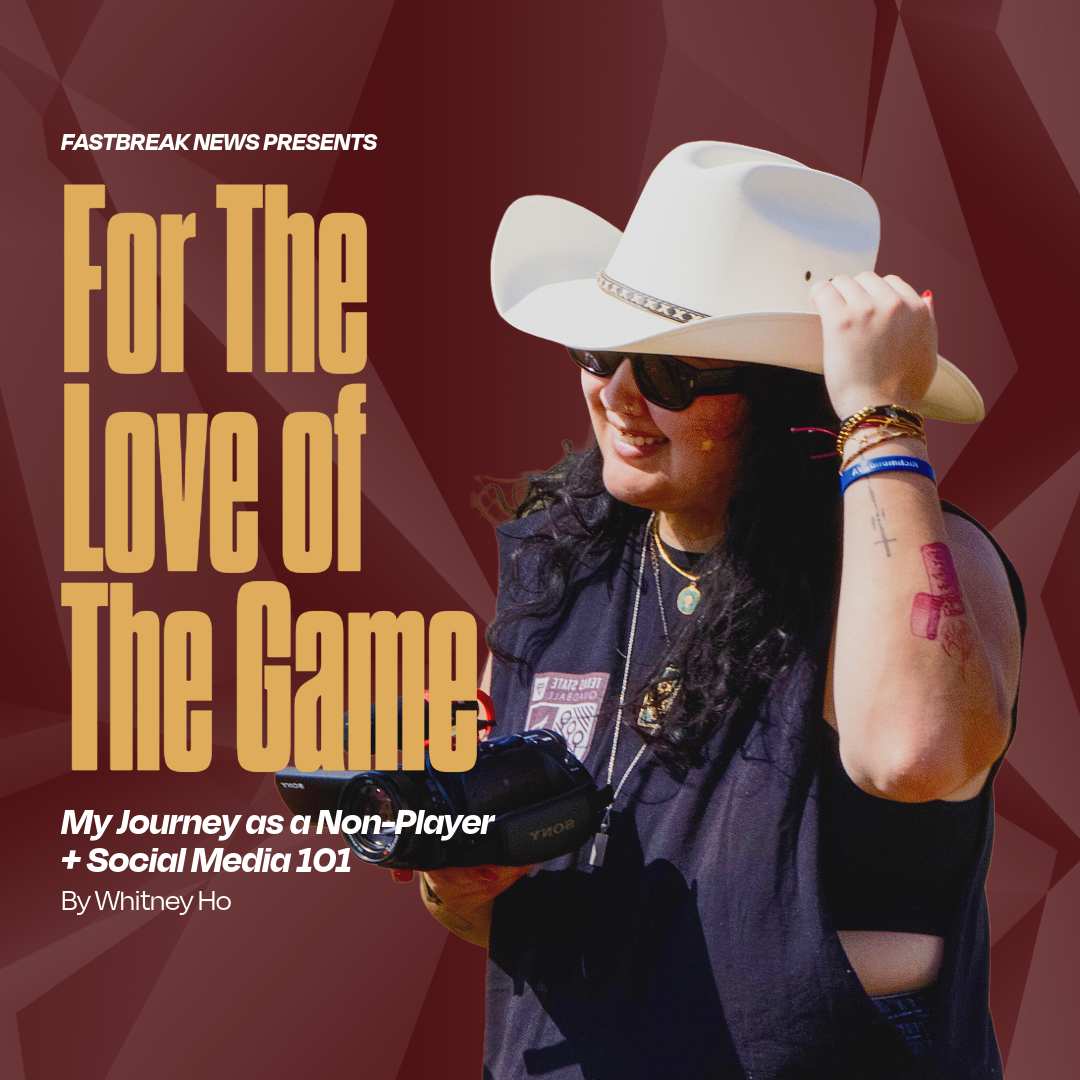
By: Whitney Ho
Throughout the past two years, I’m sure many of you have seen my name start popping up in more and more articles, announcements and social media posts. You’ve probably wondered, “Who the heck is this random college kid and why is she attached to so many things?” My name is Whitney Ho, I just turned 22 years old and I’m a senior at Texas State University. My time in Quadball has been anything but conventional, and being a non-player in an amateur sport is incredibly challenging, but also rewarding. Like almost everyone in this sport, I do everything that I do without pay, but also without on-field glory, working behind the scenes to shine lights on my teammates and help make sure the sport is safe and has a future.
Oftentimes, recognition in our world is entirely player-based, and while I understand that the impact that I have on the sport goes mostly under the radar, I don’t think that should be the case. In every sport, there is so much more than just the players. I’m lucky enough to contribute to Quadball media for Texas State, FastBreak News, Texas Quadball Conference and USQ. This includes, but is not limited to, running Instagram accounts, making graphics, filming content and writing articles. Creating an eye-catching environment that has reputable media and coverage makes players feel special and important, which is crucial to recruitment and retention. Additionally, the discourse created by researching historic storylines, current events and other aspects of the game helps our players and our community feel more involved, regardless of what team they’re on or how much they play.
So, how exactly did I get into Quadball? Why don’t I play? What is the secret behind my incredibly successful social media and journalism career? Okay, maybe that’s a bit far. But I’m proud of the work that I’ve done, and I want to share my story to allow you to see a new perspective on the sport that we all love. And maybe you’ll pick up a few tips and tricks along the way to improve your team’s social media and image. Perhaps you’ll even see the sport in a new light.
This article will dive deep into my story before Quadball and how I became a part of Texas State, progressing through the past two years of my life with the sport. I’ll talk about my time with FastBreak, Texas Quadball Conference and USQ, detailing the work that we’ve put in recently and how that work has impacted the sport. At the end, there will be a section on my social media strategy, so if that’s all you’re here for, the section is labelled and feel free to skip to it. But I think my perspective will allow you to see the sport more holistically. I’m being very vulnerable by writing this, which is terrifying, but I want my voice to be heard and my story to be remembered. I’ll say this again at the end, but it’s all for the love of the game.
How Quadball Found Me
This may be a crazy revelation to some of you, since I feel like I tend to make it a large part of my personality, but I played soccer. “Played” is a funny word – I lived for soccer for over eighteen years. Ate, slept and breathed it. I don’t remember the age at which I started being a goalkeeper, but I think that just goes to show you that I played for as long as I’ve been conscious. My life throughout elementary, middle and high school was built around soccer, and there was no such thing as an offseason. Since I was a goalkeeper, that also meant extra training, extra lifts and immense mental strength that took me years to develop. I played youth club soccer at a national level, and was recruited to play NCAA soccer and track and field for my old college in Ohio, my home state. I think I would’ve played soccer forever, but the summer before my sophomore year of college, I dislocated my shoulder during training. The dislocation was so severe that I tore nearly every major ligament in my shoulder, including my labrum and rotator cuff. I also had severe nerve damage and permanent lesions on my bones from being aggressively scraped against each other during the dislocation, and I was forced to medically retire from contact sports.
Obviously, I was devastated. I had surgery in November 2023, and even now, I am reminded of my limits. I permanently lost fifteen degrees of range of motion in my shoulder and it will never be able to sustain the athletic lifestyle that was the only thing I once knew. Needless to say, I had a major identity crisis. I had invested nearly everything I had into soccer for the majority of my life, and I had no idea who I was without it. It was the most isolating time of my life, and it got so bad that I had to transfer schools as an incoming junior, picking up my entire life and moving to a strange state that I had only been to a few times before just to run from the heartbreak. Athlete mental health is so important, but no one talks about what happens after you retire, whether it’s your choice or not. I had to reinvent my entire identity at nineteen years old and figure out how to keep living without my purpose.
I arrived at Texas State defeated, with quite literally no one, since I didn’t have any friends in Texas. One day, during a visit to my new school, I found a random shirt in the bookstore that said “Texas State Quidditch” on it, and my interest was piqued. After stalking them on Instagram and learning more about the sport, I ended up going to a meeting because I was desperate to find something to fill the hole in my soul that soccer had left. Walking into the room alone was one of the most vulnerable things I’ve ever done, but the team allowed me to grieve what I had lost while also showing me that I was more than what I used to be. I found a place among them, and even though I would never be able to play Quadball, they reassured me that it didn’t define who I was to them and gave me the space to discover what else could make me happy.
My Time at Texas State (2024-2025)
The transition from being a high-level club soccer player and NCAA athlete to being on an amateur club sports team was drastic. I had grown up with access to the best facilities, the best trainers, the best coaches and with a naive perspective that everyone had these things available. I realized very quickly that Quadball struggles with things that I took for granted, like easy recruitment and financial security. Throughout my first semester, I learned about what the sport used to be before COVID and the decline that it’s been in since. I watched old film of now-dissolved college and club teams like the University of Rochester and Texas Cavalry, listening to stories from my teammates about past nationals and how they struggled to even be taken seriously at recruitment events by the rest of our student body. I found out that our club barely fundraised enough money to go to Nationals, at times even falling into debt to executive board members just so the team could stay afloat.
The media team at Texas State was a spontaneous creation that TXST Quadball President Julie Picasso and I just fell into naturally. His camera, which I’m sure many of you have seen either me or him filming with, was handed to me at the 2025 Garland National Qualifier and I was told to film our games. That snowballed into me becoming the default videographer of most of our in-game and in-practice content, which was perfect on paper for me since I was always available on the sideline. But in reality, it was devastating. In my mind, I was being relegated to this role, and it was just something else to remind me of my isolation. However, in March 2025, the first vlog on the Small Hoop with my film was published, and the praise and support we received blew us away. Instead of just being the camera girl, I leaned comfortably into my role and became the natural narrator for our story throughout the rest of the semester – filming practices, tournaments, parties, our most vulnerable moments and more to fully encapsulate our team, our philosophy and our memories. This was also the beginning of my journey as a journalist, allowing me to get a sense of media and coverage in the Quadball world, and I started brainstorming ideas on how to improve it so I could contribute as much as I could with what I had.
FastBreak News
In May 2025, I spontaneously submitted an application to become a writer at FastBreak News and was accepted for a position as the writer for the San Antonio Soldados. I’m currently pursuing a degree in English Language and Literature at Texas State, and my concentration is in creative writing. I wanted to diversify my writing portfolio and also become more involved in Quadball in general, and this was the perfect opportunity. After meeting Editor-in-Chief Riley Hodder and Managing Editor Jack Levy, I threw myself into coverage for the Soldados and learned infinitely more about the sport than I ever thought possible. My free time was soon spent watching film and asking my friends about older players and history, allowing me to feel proud of the work I was producing. I would also like to add that before we had to scrap our unofficial MLQ pick-ems, I was consistently in the top two. I swear to you, I know ball.
Over the summer, I wanted to travel, and I found out that the 2025 IQA World Cup was being held in Brussels, Belgium. My teammates and I joked about it, saying things like “Oh, it would be so cool if we went to Belgium” or “We should go to Belgium” throughout the entire spring semester. Crazily enough, I realized I was serious, and a group of us made the trip happen. I was going to go purely for leisure at first, but after talking more with Riley and Jack, it was decided that I was going to partner up with Nick Love, who would be attending with African Nations, to provide ground coverage at the tournament.
Clearly, Nick and I are great friends now, and he’s my Michigan-ride-or-die, but the work that we did at IQA was special. Not only did we write preview articles before the tournament, but we introduced ourselves to each other on Day One and immediately got to work. By the end of the day, we were a well-oiled machine, producing Snitch Cams and player interviews, all while Nick was playing in the tournament and I was filming for the Small Hoop. FastBreak News gained over 400 followers on Instagram in just one weekend after the work that Nick and I did at the event, and Riley and Jack’s crucial contributions behind the scenes, like the famous FastBreak News IQA Jersey Bracket.
I’m really proud of the coverage that Nick and I did. I finished the summer on a high, becoming a better journalist and gaining a better understanding of how I wanted to use my new skills to keep advancing both my position in the sport and the sport itself. The work that we did, especially the written articles covering IQA, gave me a lot of insight into the behind-the-scenes aspect of Quadball events and also allowed the community to feel both heard and in the know.
My Time at Texas State (2025-Present)
I entered my senior year at Texas State with a completely different life than the trainwreck that I was experiencing just a year prior. In May 2025, I was elected to the PR, Marketing, and Recruitment Executive Board chair for the team and took control of the @txstquadball Instagram account in June. It took me a little to get the hang of what I wanted to do with the account, but my main goal was to have fun. I know that sounds cheesy, but it’s the truth.
Since I’ve been the social media manager at Texas State, our average monthly views on Instagram have skyrocketed, going from around 15K views to anywhere between 65K-80K. We’ve also gained followers, becoming one of the few teams in the nation to break the 1,500-follower barrier and are currently the most-followed college Quadball team in the world. Not too bad, if I say so myself. My social media strategy is simple – I post the type of content that I wanted while I was an athlete. Things like mic-up videos, walk-up questions and fun graphics that are player-oriented not only increase visibility due to the humorous editing style I’ve accumulated, but also focus on each player and allow them to be featured. The content I create is mostly just ideas I’ve thought of or seen and written down, and I invest considerable time making sure everything is funny, joyous and enjoyable to viewers outside our community.
I still hold the role that started it all, which is the videographer for the Small Hoop. Our fall semester vlog came out at the end of January, and you all should watch it because Julie and I (mostly Julie tbh) worked very hard on it. On top of the Small Hoop and TXST social media, I have also been collaborating with Brandon Kubena and Ashton Butler to slowly revive the Texas Quadball Conference, and took over that marketing position too. I was even fortunate enough to meet our amazing CEO, Amanda Dallas, and work closely with her to reignite the USQ Tiktok account and assist with other media work crucial to the sport’s success.
I still have a lot to do, if I’m being honest. There are so many things I want to bring to the sport and I feel like I don’t have enough time, or that it’ll take me too long. That’s why I created my super-top-secret-seven-phase plan to “take over Quadball media” in May 2025, and so far, it’s been going great. Wish I could tell you what the plan entails, but that defeats the whole “super-top-secret” part – just know that it’s working. One of the goals of the plan is to grow my personal presence in the sport and cement myself as a well-respected Quadball journalist. But the “main” goal (that I’m willing to share, at least) is to also set a standard going forward on media coverage to treat Quadball players as professional athletes, because I believe that with a strong enough culture that makes players feel valued and constant discourse on current Quadball events, our sport will continue to grow and thrive.
Social Media 101
When running a sports social media page, I post from three different categories – logistical graphics, player-focused reels and unique, informal, miscellaneous stuff.
Logistical graphics, such as roster announcements, event reminders and fundraising information, are easily the most important aspect. I use the TXST Instagram as an archive of all important club events, allowing recruits to have a central hub where all information is collected. When it comes to roster announcements, our first-ever roster post for this season was one of the most viewed on our page due to everyone wanting to know who returned to the team after last year and who left/graduated. Viewers in our community appreciate easy access to information, especially when streams aren’t run by USQ, have no commentator or are hard to see. It’s also important to develop your own consistent aesthetic that you can build off of when creating new graphics to maintain a cohesive and sophisticated brand. I use Canva for all the graphics I create and I try to stay away from templates as much as I can to preserve my integrity as a graphic designer, but it’s also very helpful to start with a template and change the elements as you go to fit your vision.
My player-focused reels are probably what everyone remembers, and for good reason. Things like mic’ed-up practices, walk-up questions and assorted day-in-the-life content allow for my teammates’ personalities to shine through, creating an inviting and comfortable environment that recruits are drawn to. It also allows the Quadball community to feel more connected with us – the good nature and passion clearly shown in each video, along with some wicked jokes, gives viewers someone to relate to, someone to laugh at and someone to root for. I use Capcut for editing because I’m too lazy to learn how to use a more sophisticated system, but the software also allows me to create templates, closed captions and insert extracted audios with ease. This is crucial when making content that is up to date with current trends.
Finally — the “unique informal miscellaneous stuff” – including but not limited to Almost Fridays, Spotify Wrapped, Valentine’s Day cards and more. I genuinely wish I could give better advice for this one, but I can’t explain how I think of this stuff besides saying that it just comes to me, sometimes in a dream or via carrier pigeon. I think being chronically online helps. The most important aspect of this is to lean into your team’s culture. If posting a bunch of Quadball memes is how you want to run your page, then by God, post those damn Quadball memes. Shoutout Illini. This sometimes makes the Instagram page feel like a fan account for the team rather than the real thing, but I like that. All athletes, especially ones like Quadball players, deserve to feel known and recognized.
Some helpful tips for when you’re starting out is to model your page after a sports page you love, whether that’s another Quadball team or a professional team from a sport of your choosing. Also, making content, any content, is better than nothing. Finding your style and niche is a slow process, and may take some experimenting before you get into your groove. Start by just creating, and then worry about becoming the GOAT later. Utilize all of the strategies for your own team with your own twist. This can even lead to you growing your page enough to be able to monetize it for extra fundraising money, which is difficult to do on Instagram but more accessible through Tiktok and Youtube. Moral of the story – be creative, take risks, and have fun. Do what you find enjoyable, because if you enjoy it, that’s all that really matters.
Conclusion
To me, Quadball is more than just a sport, which is a sentiment I’m sure all of you share. I would have done anything to play soccer again, but it wasn’t in my future, and Quadball was there for me. Quadball is a sport that can be enjoyed by anyone, regardless of not only gender identity, but also sports background. Athletes who have been raised playing sports like I was and can no longer play that sport still need support, a healthy team environment and a physical outlet. While players who have never played sports before are one of our biggest recruitment demographics, I think that we should also be focused on retired players of more “conventional” sports, because there are so many people out there with stories like mine who are looking for something to replace what they’ve lost.
Ultimately, I do all that I do because I owe my life to Quadball. Without Texas State, I have no idea where I would be, but I do know that I would be unhappy, unsatisfied and still searching for something to fill the emptiness in my soul. I’ll have to spend the rest of my life with what could’ve been with soccer, and the pain that I experienced will never truly go away. But in my time of greatest need, Quadball opened its arms to me and gave me another purpose. It also furthered my career, helped me see the world and most importantly, it introduced me to people whom I can’t imagine my life without and whom I know I’ll love forever. I’m planning on being in this sport for a while and I’ll do what I can to make sure others can feel the joy, love and satisfaction that I have grown to appreciate. Really, what is doing anything in our sport if not doing it for the love of the game?