By: Brandon Borges
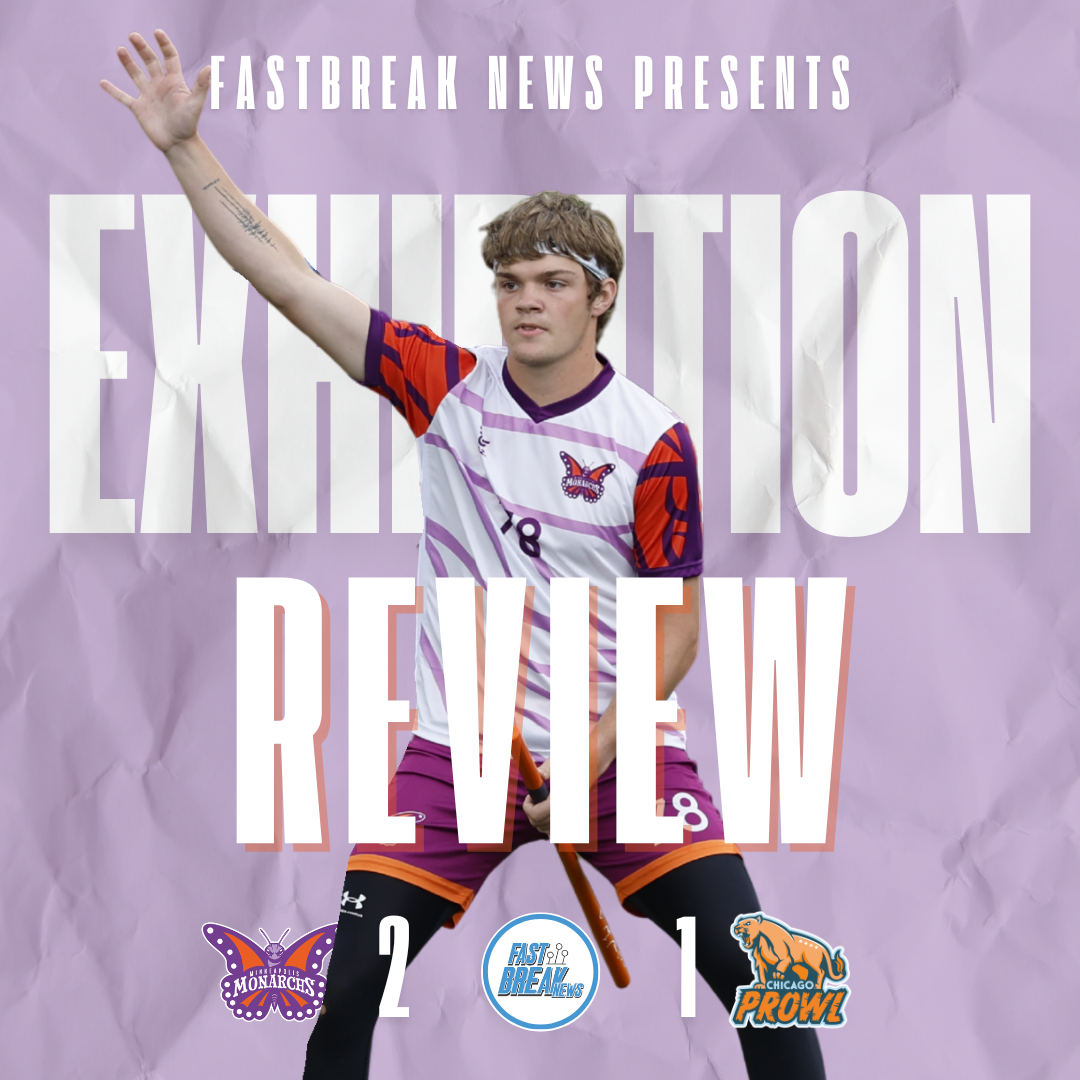
This MLQ season’s opening weekend, the Minneapolis Monarchs, instead of their scheduled contest against the Toronto Raiders, played an exhibition series against a squad composed of Chicago Prowl players and many members of the Prowl’s practice squad, the Chicago Meowstars.
An MLQ Exhibition game does not count for or against a team in standings, but the series was broadcast on the MLQ Network YouTube page. This made the series the first piece of live-broadcast quadball action of the summer, and it gave viewers a glimpse of two of the expected title contenders within the Central Conference.
The result of the series (the Monarchs won 2-1) was inconsequential and should not be viewed as an actual measure of either team’s overall strength this season. Still, the series offered a look at some of the depth and younger stars on both Minneapolis and Chicago, and those performances should not go unnoticed.
Shining Meowstars
One of the biggest storylines for the Prowl this season is how they will phase in the bevy of younger players on their roster. With Chicago’s longtime veterans taking more of a backseat during the exhibition series and even switching positions, the focal point for the Meowstars was indeed developing the next wave of Prowl contributors.
The defensive excellence of Ariana Zhang had already been showcased during Chicago’s 2025 season, yet still deserves mention. Her ability to move her feet and stay glued to ball-carriers frustrated many Monarchs throughout the series.
Veronica Hoffman and Amelia Winke are also cornerstone beaters that Chicago is looking to elevate, and both saw significant playing time during the weekend. Hoffman in particular demonstrated quick reaction time and the ability to avoid being drawn into purely beater-versus-beater battles on drives. Those traits helped earn Hoffman one of the first-ever USQ Greenhouse Awards and the trust of the Prowl coaching staff, who named her an assistant coach this season.
While all of the players mentioned so far have rostered for Chicago in the past, the real question was how Kevin Fantozzi, a preseason favorite to win Rookie of the Year, would fare in MLQ action. The Meowstars made a point of putting the ball in Fantozzi’s hands to start possessions, effectively giving them control of the offense. Fantozzi delivered in a big way, displaying strong vision and their already well-known driving and shooting ability. Fantozzi also developed impressive on-field chemistry with fellow Chicago rookie Brady Guenther, who knocked down several shots within the Meowstars’ set offense.
Defensively, Fantozzi challenged nearly every Minneapolis ball-carrier, demonstrating a good deal of speed and strength in those battles. Fantozzi formed a strong one-two punch with Jemil Hunter, who often entered at keeper after Fantozzi and continued applying relentless pressure with excellent speed and positioning.
Overall, the Meowstars showed that Chicago’s younger core has responded well to the coaching of Tad Walters, and that same group showcased the skills that had MLQ abuzz to begin with.
Mix-and-Matching Monarchs
The Monarchs took a different approach to their developmental focus during the series, but one that was no less effective. More of Minneapolis’ veterans took the field alongside the team’s younger players, helping integrate them into the system. The impact was apparent in the crisp passing and offensive chemistry the Monarchs displayed throughout the weekend.
Delay Hering in particular led the team on the pitch, slipping out of numerous tackles and dazzling with several impressive finishes at the hoops. Emma Vasquez, who is new to the Monarchs but already well known as a quadball star, looked right at home, sticking to players on defense and not allowing the Meowstars any easy drives past her. Alex Tidler, meanwhile, quickly settled into Minneapolis’ system after arriving from the Kansas City Stampede, providing high-energy minutes and constantly battling for dodgeballs while facilitating exchange beats.
Those veterans led the Monarchs’ rookies by example, and that influence was evident among the players arriving from the University of Minnesota. Lauren Gomez worked well with the experienced Minneapolis beater corps, helping remove dodgeballs from play while the Monarchs were on offense. That opened space for some excellent cuts in front of and behind the hoops by Norah Fitzgibbon. Fitzgibbon fits the mold of the standout chasers Minneapolis has featured throughout its history, and she seems likely to earn opportunities in higher-stakes contests later this season.
Jacob Fuhrman also delivered several strong offensive shifts, including a fantastic long-distance shot late in Game Three that effectively put the contest out of reach and set up a classic Max Meier game-winner. The most impressive rookie performance for the Monarchs, however, may have come from outside the University of Minnesota program.
Bruce Lowmanstone, arriving from the Harvard Horntails, had already grown into a significant contributor at the College Division I level. During this series, Lowmanstone demonstrated qualities of a great offensive initiator. They drove toward the hoops at the right moments, outraced and outmuscled defenders to spots and stuck paydirt in the opportunities his drives created. He finished at the hoops, took close-range shots when hoop defenders came off to help make contact and found open chasers when multiple defenders collapsed to Lowmanstone.
Lowmanstone’s attacks from the wings and behind the hoops forced constant adjustments from the Meowstars’ defense. If Fitzgibbon and Fuhrman can continue converting opportunities around the hoops, the Monarchs could build a particularly dangerous offense around that chaser line.
The Benefits of Exhibition Games
The Prowl have long prioritized giving opportunities to younger players through the Meowstars, and that commitment has been evident in the talent that has emerged from the region. The Illini Ridgebacks have grown tremendously over the years, and a significant reason for that growth has been their opportunities to gain experience against MLQ competition through exhibition games. So while this final takeaway has less to do with the games themselves, the series illuminated a potential expansion of MLQ’s benefit to US-based Quadball: more teams should engage in exhibition play throughout the summer.
The stakes of MLQ series have always been high, as wins and losses are critical for teams fighting for position ahead of MLQ Championships. While this has created a compelling viewing experience, it often encourages teams to rely heavily on their top lines. As a result, players deeper on the roster may struggle to find meaningful opportunities throughout the summer.
For younger college players, MLQ has worked to expand those opportunities through league bylaws, practice squad expansion and featured games in the Next Gen Series. However, players on the 30-player main rosters often have fewer chances to develop in game situations. The league’s current structure, which leaves teams with only two divisional series before Conference Championships, has only increased the pressure to avoid mistakes and lean on established contributors.
One solution to this dilemma comes in the form of an exhibition series like this one. These contests provide rookies and depth pieces with a less intense environment to test themselves. They also get a chance to evaluate how the work they put in during practices and the USQ season stacks up against players in similar roles.
Unfortunate circumstances may have led to this series, but the benefits for the Meowstars and younger Monarchs were apparent. Exhibition games may not count in the standings, but the reps they provide are meaningful. More teams should follow the example set by Minneapolis and Chicago by seeking out these opportunities, both to give their players quality minutes on the pitch and to discover which players stand out beyond drills and scrimmages.