Series Review: Kansas City vs Houston
By: Brandon Borges
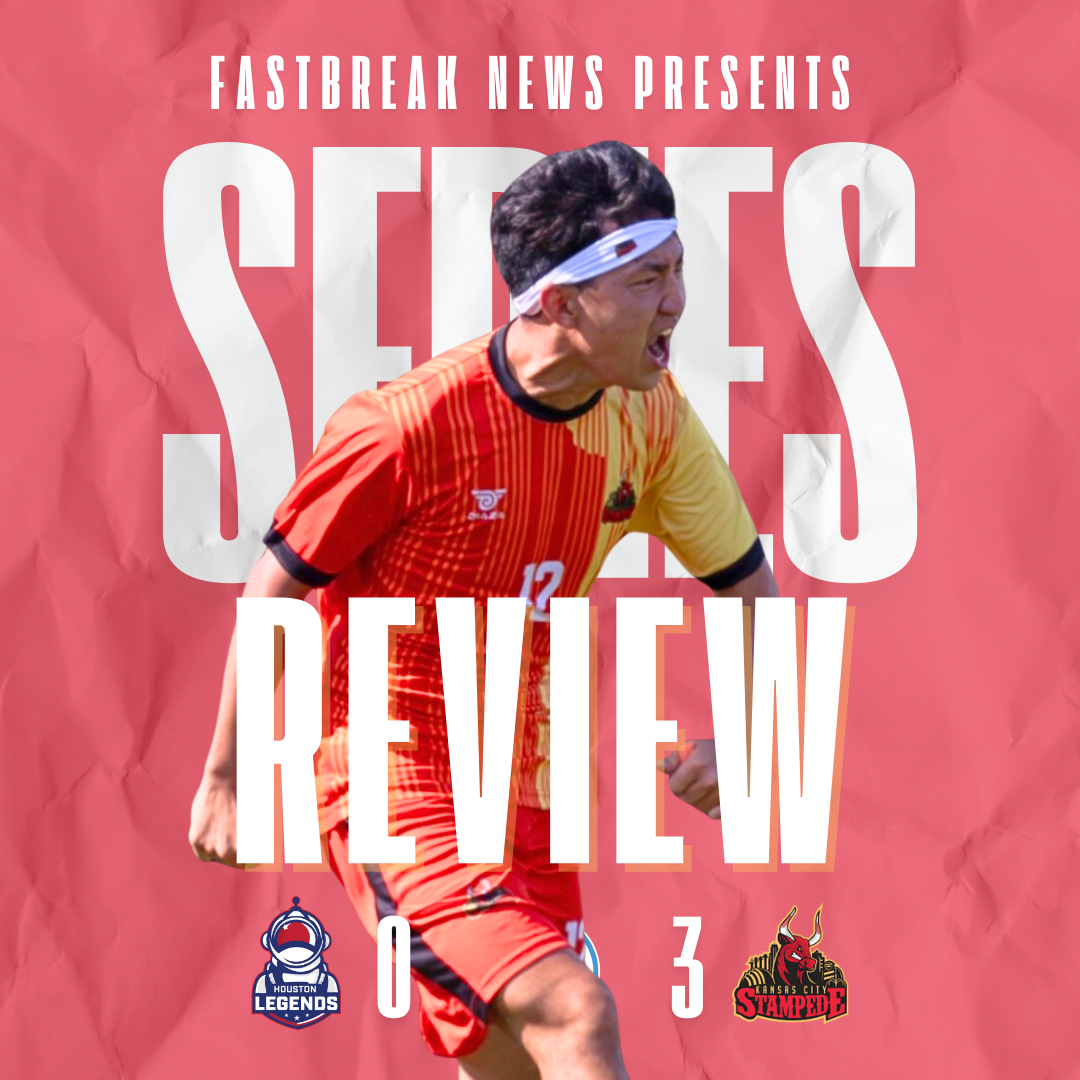
Topeka, Kansas hosted the series of the week for the second week of Major League Quadball, as the Houston Legends came to the Cattledome to face the Kansas City Stampede. Expectations were high for Kansas City, who topped our preseason Power Rankings as the presumed best team in the league. Houston, however, has frequently given the Stampede trouble in their matchups. Though the Legends were swept by Kansas City last season, they came close to breaking through, with one game reaching an exciting golden-goal scenario where the next score by either team would end the game. With several high-profile additions to their 2026 roster, Houston was once again ready to challenge one of the league’s best.
This series brought out plenty of intensity from both teams, with hard hits and many fouls coming from both sides. Now, with the results determined, here are some of the major takeaways from the performances of both teams.
An Actual Stampede
Part of the Stampede’s lofty preseason expectations came from a vaunted chaser corps featuring Team USA-caliber and otherwise elite talent. Coming into this particular series, however, one potential concern was the absence of both Bitzy Archibold and Mimi Baldwin, two renowned women chasers Kansas City added this season.
The Stampede adjusted accordingly, making a rather unexpected move: Keighlyn Johnson, who has played primarily as a beater throughout her club and MLQ career, started the game as a chaser. She quickly proved how wise that decision was by scoring the Stampede’s first goal of the series off a pass from Vincent Reyes. Johnson was a fantastic finisher throughout the series, weaving around hoop defenders and cashing in a number of goals for the Stampede.
Starting alongside Johnson, Head Coach Lauren Smith had an excellent all-around series. Smith’s impact has to be seen to be fully appreciated, because the results of her work are not easily quantifiable in box scores or counting stats. Smith set solid screens, blocked and forced shots, dove and rolled for offensive rebounds to keep plays alive and made several open-field tackles that prevented fast breaks, even from Houston’s fastest chasers. Brenna Duncan also chipped in with a goal and fought hard on defense to prevent the Legends from scoring on the side hoops.
What made the performance of all three players most impressive is that the trio shared minutes across two chaser lines, meaning that two of the three were almost always on the field in hot and humid conditions. That level of endurance in a series against one of the most physical offenses in the league will be understated by the box score, but it deserves mention as a key part of Kansas City’s performance.
When the Stampede offense clicked, it was an elite ball-spreading effort. Reyes and Riley Usami in particular were able to pick apart Houston’s defense. Both players established themselves as elite scoring threats who virtually guaranteed points if the defense did not crash to them.
When the Legends did bring dodgeballs and multiple bodies their way, the duo found their passing options for quality looks. Reyes worked to create great opportunities for drivers and dunkers like Jackson Herdade and Daniel Rendon, while Usami delivered four assists alone to the ferocious Ryan Mehio. Of course, Herdade and Mehio were also able to create looks of their own and when the center of the defense opened up, the two stormed to the hoops and flushed the quadball home.
While Kansas City was able to flex its offensive muscles for major stretches, especially in Game 1, the team did not look unbeatable. The Stampede had significant scoring droughts, earning only two goals in an 11-minute stretch in Game 2 and only two goals in an eight-minute stretch in Game 3. While Houston’s defense should certainly be credited, as will be discussed later in the article, it did seem like the Stampede started to grow complacent and purposefully slowed down the frenetic pace they thrive in. When that pace slowed, passes became less crisp and drives turned into solo efforts that the Legends crashed to and stopped. Houston’s hoop defense also featured physically strong chasers such as Billy Nellums and when Kansas City challenged Nellums and company at the hoops, the Legends swallowed those dunks up and made stops. Additionally, Kansas City failed to convert a number of fast breaks, as the leaders of those drives either ran into Houston bodies or threw up wild or slow shots that missed their marks.
Now, fast breaks are something that many teams fail to convert more often than expected early in the season, as players are still feeling out the speed and favorite spots of their teammates. The Stampede should certainly improve in that aspect. However, championship contenders like the New York Titans and Chicago Prowl are able to send out lines that excel at slowing the game down on both offense and defense, much like the Legends were able to do at points, and use their strength and size to repel dunks.
Kansas City’s chasers proved they are championship-caliber this weekend when they clicked, even as the Stampede’s decisive advantages came from somewhere else on the field. But to contend with the top brass of MLQ, Kansas City will need to determine how to keep the pace quick and how to find consistent looks against teams with larger, more physical chaser corps.
Legends in the Making
Without star chaser Andrew Acosta rostered for the series, one of Houston’s biggest question marks coming into the matchup was how the team would integrate incoming star Riley Moehlmann into its roster. Moehlmann’s talent is unquestionable at this point in his career, but after spending several seasons with the San Antonio Soldados, his presence on a Legends team with an established offensive strategy carried intrigue. From the opening minutes of the series, Houston’s coaching staff made its decision apparent: Moehlmann was given complete control of the offense while he was on the pitch.
The results were stunning, as Moehlmann’s chaser line scored at an absolutely torrid pace. Moehlmann rocketed in shots, dunked over Stampede chasers, and blazed to the hoops on several fast breaks, even when Kansas City had dodgeball control. But what may have pushed the offense over the top was Moehlmann’s chemistry with young newcomer T.J. Farrow.
Farrow featured as an excellent alley-oop target for Moehlmann, leaping high around the center hoop to catch and dunk several goals for the Legends. Farrow’s game became the epitome of perhaps Houston’s greatest takeaway from the series: the young talent on the Legends has arrived and elevated itself into key pieces of the roster.
Last season, Spencer Quintana showed promise but was not necessarily featured as a major contributor for Houston. In this series, Quintana truly arrived as a lightning-quick offensive weapon who could fly around the field to get by defenders, grab loose balls, and otherwise buy time for the other Legends on offense to set up. Defensively, Quintana weaponized his speed and ability to catch the quadball with one hand to end Stampede possessions in a flash before darting across the field for fast break chances.
Not to be outdone, rookie Evan Ferchuk demonstrated great shooting ability, using their reach to launch the quadball over hoop defenders for goals. A bright future in Houston shone throughout the series, and that future complemented the veteran Legends who were not to be outdone.
Brandon Kubena was a defensive monster, swallowing up elite drivers such as Mehio over and over again. This was most apparent on Kansas City’s fast breaks, as drivers with Kubena in their way had to pass or shoot early, or else Kubena would tie them up and end the break. Mallory Hughes drove in for a dunk and organized the Houston offense, earning a couple of assists in the process. Sousa, while new to the Legends, made herself at home by finding lanes and making stops on the side hoops. And when grouped together, Nellums and Sarah Stewart terrorized the Stampede side hoop defenders with screens and dunks, overpowering the Kansas City chasers who tried to stop them. Houston did well to outperform its eighth-place status in the FastBreak News Power Rankings and flashed a chaser corps that can hang with the best.
Issues began to mount among the chasers, however, in a couple of areas. Offensively, the Legends did pass well around the Kansas City hoops, but at times they got too close to Kansas City’s beaters, losing possessions that could have been converted. At other points, the Legends opted for close, difficult shots at the hoops rather than fully dunking the quadball, even when beaters were not necessarily close. Both of these struggles will require some cleaning up, as getting as close to the hoops as Houston did comes at a premium in the Central Conference, which features teams like Chicago and San Antonio that pressure the ball-carrier high and often.
Defensively, while Houston’s hoop defense was stout and turned away several dunks, the Stampede chasers often had enough space to drive in and fire shots at the center hoop, or hit hammers when Kansas City set up looks on the side hoop. The reluctance of Houston’s hoop defenders to move off their designated hoops also allowed the Stampede chasers to corral several offensive rebounds, extending possessions and giving dangerous shooters like Usami several cracks at the hoops. More proactivity and movement will be required from the Houston defenders, as teams will scout out their stout dunking defense and work to remove defenders from their spots.
Again, with a roster that now features speedy defenders such as Quintana and Moehlmann, these issues are fixable. Kansas City may also be an outlier as far as chaser speed is concerned. However, while the Legends chaser corps matched up well with the Stampede chasers, this series still ended in a sweep for Kansas City and the biggest contributing factor lay squarely in the disparities among the other quadball positions.
Where’s The Beat?
Houston was always going to have an uphill battle contending with the elite Stampede beater corps. Even with new additions in UTSA’s Javi Tijerina and SHSU’s Daisy Alfaro, along with the elevation of young beaters David Wright and Ray Nuñez, the Legends needed to prepare for a proverbial “who’s who” of Midwest beaters. Kansas City amassed talent from several of USQ’s best club and college teams, including Boom Train, Reign QC, Chaos, Creighton and Mizzou. That problem was exacerbated by Houston having to play the series without either Wright or Tijerina. Thus began what became a brutal series for the Legends’ beater corps, as the Stampede held three distinct advantages over them: experience, strategy, and, most importantly, numbers.
The series opened with a tour de force by Kansas City’s Addi Himmelmann. Himmelmann constantly made plays that left Houston with little room to take control of dodgeballs, whether that meant outracing the Houston beaters to loose dodgeballs, taking unarmed beaters out of play while setting up hammer beats, or even keeping dodgeball control while her beater partner at the time, Chanun Ong, was in the penalty box. Himmelmann set the tone for the series with her speed, hustle, and smarts. Nuñez and Alfaro started against Himmelmann and Ong and while both would go on to have better shifts later in the game, they were overwhelmed by how quickly the starting Stampede pair played. MLQ beating is a different beast than the USQ College Division and it requires a more measured approach if young beaters wish to succeed.
While Nuñez and Alfaro came off to reset, veteran Legends Conner Mason and Caleigh Duvall contended with Creighton star Derek Dearking and Stampede veteran Purvi Mujumdar. Mason and Duvall are quality beaters who have done well against the Stampede in the past, but in Game 1, Dearking was all-world. Dearking started fast break after fast break, beating out Mason once the Legends set up their offense and quickly taking out the Houston chasers carrying the quadball. Dearking has a cannon of an arm and a quick trigger and with Mujumdar patrolling behind the hoops and staying constantly vigilant of the unarmed Legends beater, the pair not only impressed with their talent, but also exposed a weak point in Houston’s initial strategy.
Throughout Game 1, the armed Legends beaters played very close to Kansas City’s hoops. Whether that was to get into position for hammers or simply to compress the Stampede defense, Kansas City took advantage of the positioning quickly, beating the Houston chasers early in possessions and running fast breaks against no dodgeballs on almost every opportunity. It was a great strategy, and it crushed the Legends throughout the pre-20-minute period. A flag catch by Drew Smith put the game well out of reach, giving the Stampede the victory.
Houston did well to recognize what had happened in the first game and in response, adjusted its approach for the second. Rather than working primarily to set up hammers, the Legends beaters focused on ensuring Houston had at least one dodgeball on defense, trusting that the chasers could both score and get back to defend Kansas City. This paid dividends, as the Stampede had to operate more slowly, make more physical stops if they wanted to prevent goals and play without their vice grip on dodgeball control for stretches of Game 2.
This is where Nuñez and Alfaro began to come alive. Alfaro started to find opportunities to poke dodgeballs away from unsuspecting Kansas City beaters, while Nuñez found a rhythm in making exchanges, pressuring offensive Stampede chasers and working in transition to retake control and even create a few no-dodgeball scenarios for Houston. Justin Dewick and Haley Grothaus were eventually able to read and respond to the situation and while the Kansas City offense still struggled at times, the Legends stalled on their scoring run.
Disaster struck, as Nuñez appeared to leave the game due to injury. Nuñez would return in Game 3, but the ensuing flag-runner period revealed the biggest advantages the Stampede had for the series: the seeking talent of Henry Hamilton and the sheer number of beaters Kansas City had on its sideline compared to Houston.
Ong and Himmelmann came into the game and with ample time to recover on the bench, they flew around the pitch, outspeeding the Legends beaters to several loose dodgeballs and giving Hamilton a number of quick looks at the flag. Houston’s seeker at the time, Logan Farrow, played defensively, trying to prevent Hamilton from having too much time to grab the flag while the Legends chasers attempted to close the game. But at this point in the series, it was clear that Houston’s beaters were losing their legs.
This is not a comment on the endurance or skill of those players. By that point in Game 2, only five beaters were able to play for the Legends, and they had already logged ample minutes on the pitch compared to the well-rested Stampede beaters. Ong was sensational, darting in to beat Logan Farrow, coming into quadball play to make a couple of stops, and hustling to every dodgeball rolling away from the action. Hamilton caught in under two minutes, demonstrating that giving him even a few looks at the flag is enough to earn his team 35 points. Kansas City clawed back to win the game, giving the Stampede a series victory with one game to go.
Game 3 was a mix of the previous two. Early on, the Stampede beaters gave their chasers ample fast break attempts and Kansas City stormed out to a 70-20 lead. However, the Legends beaters again worked to contain the break and helped bring Houston within one goal of tying, 90-80. Kansas City called a timeout, and Dearking, Usami and Smith calmed the game down for the Stampede. Once the flag runner came onto the pitch to start the post-20-minute period, Ong and Himmelmann once again blazed past and around Houston’s depleted and exhausted beater corps, helping Hamilton catch another flag in three minutes en route to a Kansas City sweep.
Conclusion
Both Frontier Division teams displayed highlights from talented chaser corps. The Stampede chasers found constant scoring pockets and room to run for several fast breaks, demonstrating their championship potential. On the other side, Houston’s new additions and rising young talent meshed well with their veterans to create a crisp passing offense with powerful dunkers and a stout defense that swatted away drivers. However, in this series, the beater matchups proved critical.
Kansas City’s dominant Game 1, propelled by Dearking and company, forced strategic beater adjustments from the Legends that flipped the script and gave Houston a sustained lead in Game 2. However, the depth of the Kansas City beaters proved too much for the shorthanded Legends and Hamilton’s seeking wizardry became the dagger that ended the latter two games in favor of the Stampede.
Houston should hold its head high but remain cautious. While the Legends proved they can hang with one of MLQ’s best teams, they need to ensure they have a more balanced roster and respond quickly to beater-play issues moving forward if they intend to make a run at MLQ Championships. Kansas City got the result it needed to stay in the running for a top seed in the conference, thanks to elite talent at every position. That said, the Stampede cannot afford complacency; they looked great, but not unbeatable and the Central Conference is just getting started.